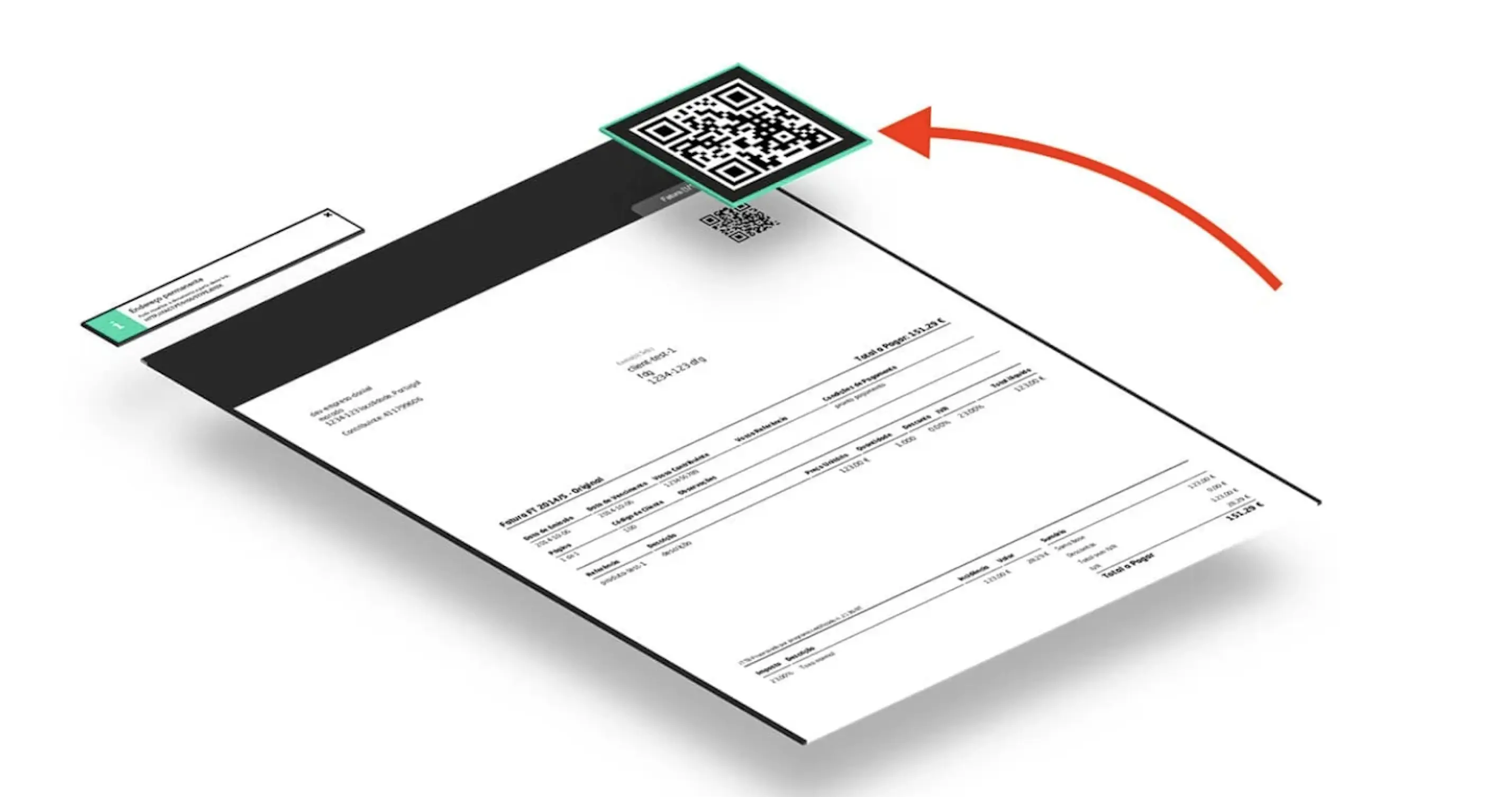

The Verifactu system introduces a significant change to invoicing in Spain, with the mandatory inclusion of a QR code on all invoices issued by Computerized Invoicing Systems (SIF). This measure aims to improve transparency and tax control, ensuring that invoice information is properly recorded at the Spanish Tax Administration Agency (AEAT).
Throughout this article, we will break down all the key aspects of the Verifactu QR code, including its purpose, placement, size, and how it impacts invoice issuers and recipients.
1. Receiving invoices and the Verifactu QR code
The process of receiving invoices under the new Verifactu system follows the same regulations as the traditional system, governed by the Invoicing Obligations Regulation (Royal Decree 1619/2012). However, the inclusion of the QR code on invoices brings new functionalities:
- Invoice verification: Recipients can scan the QR code to check whether the invoicing record is held by the AEAT.
- Access to invoicing records: The AEAT will offer services allowing both issuers and recipients to download the invoicing records submitted through Verifactu SIF.
- Tax control: It facilitates the detection of potential tax fraud, providing greater security for both taxpayers and the Tax Administration.
2. Mandatory QR code on all invoices
Since the entry into force of Royal Decree 1007/2023, all invoices generated through a SIF must include the QR code, regardless of whether it is a VeriFactu system or another type of invoice issuance system.
Purpose of the QR code
The QR code on invoices is not used to send the invoice to the AEAT, but rather to:
- Cross-check records at the AEAT: If the invoicing system is VeriFactu, the customer can scan the QR code to check whether the invoicing record is at the AEAT.
- Register the invoice in non-verifiable systems: When a non-verifiable system is used, the recipient can submit the information to the AEAT by scanning the QR code, which serves for future validations.
- Greater tax reliability: The presence of the QR code allows customers to trust that their supplier is correctly declaring their taxes.
3. QR code on electronic invoices
When an invoice is electronic, there are two possible scenarios:
- Structured electronic invoice: In formats such as XML or Facturae, printing the QR code is not required. Instead, the QR information is incorporated into the invoice content via a verification URL.
- Unstructured electronic invoice: In PDF, TIF, or other visual formats, the QR code must appear as on a printed invoice, ensuring it is easily readable.
4. Exceptions: QR code on delivery notes and packing slips
The QR code is only mandatory on invoices, so it should not be included on delivery notes or packing slips. This applies to both business-to-business (B2B) and business-to-consumer (B2C) transactions.
5. Paper and digital invoices
It is not mandatory to print a paper invoice if electronic invoicing is used. However, if a printed copy or a digital image (such as a PDF) is generated, the QR code must be visible.
On the other hand, for structured electronic invoices, the QR image is not needed — only the information contained in it.
6. How to verify the QR code at the AEAT
The QR code can be scanned from any device with a camera and internet access. The AEAT recommends using its official application to guarantee the authenticity of the code and prevent fraud.
7. QR code placement on the invoice
The QR code should be placed at the beginning of the invoice, preferably in:
- Upper left corner if the invoice is in portrait format.
- Upper left side if the invoice is in landscape format.
- Only on the first page, in the case of multi-page invoices.
This layout is aligned with the General Tax Law (Article 29.2.j), promoting transparency and tax control.
8. QR code size on invoices
To ensure the readability of the QR code on any invoice, its size must be between:
- 30x30 mm minimum
- 40x40 mm maximum
This range ensures that the QR code can be correctly scanned by any device.
9. Benefits of the Verifactu QR code
The implementation of the QR code on invoices brings several advantages:
- Greater tax security: Reduces fraud and improves transparency in commercial transactions.
- Ease of verification: Both issuers and recipients can confirm the validity of an invoice at the AEAT.
- Automation and digitization: Facilitates document management, preventing errors and information loss.